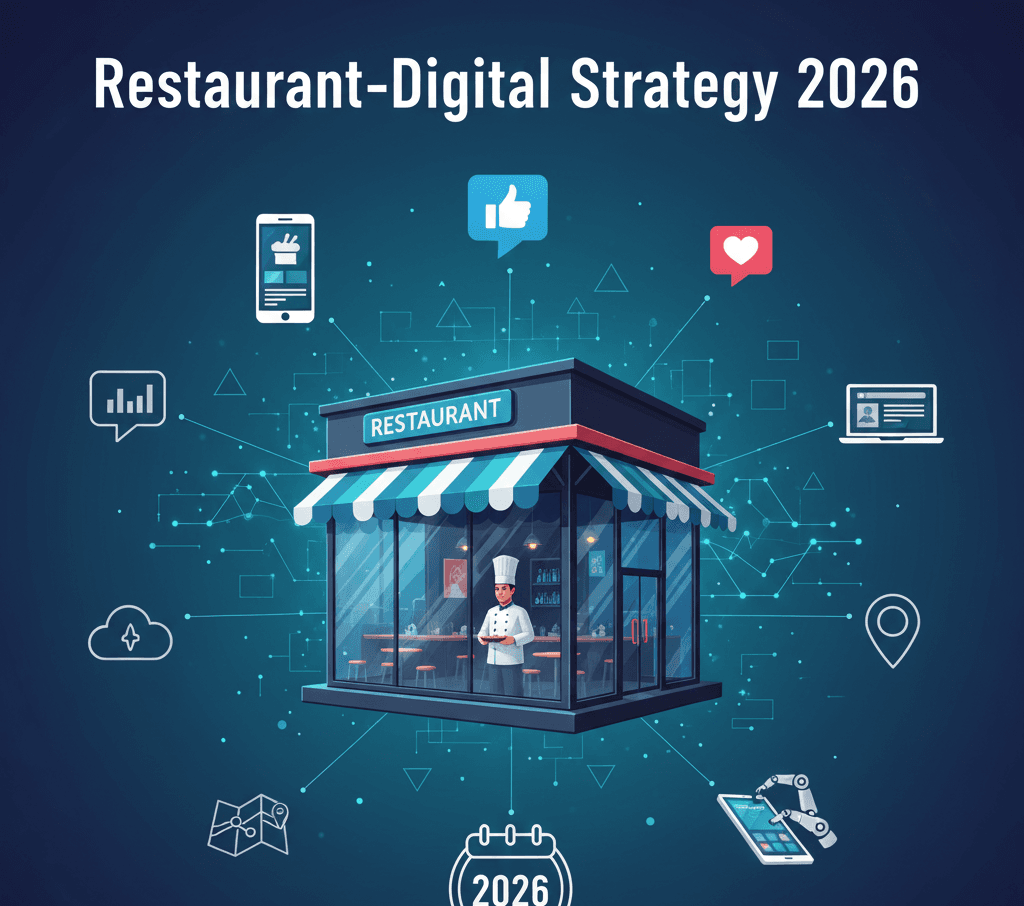
The Invisible Drain: How Offline Businesses Are Losing Customers in 2026
For decades, many small businesses thrived on a simple formula: a great location, a friendly smile, and solid word-of-mouth. But as we move through 2026, that formula is no longer enough to keep the doors open.
Today, "offline" doesn't just mean you aren't selling on the web—it means you are invisible to the modern consumer. Here is how staying offline is quietly draining your customer base.
1. You Are Failing the "AI Recommendation" Test
In 2026, the way people search has fundamentally changed. Instead of typing keywords into a search bar, users ask their AI assistants:
"Find me a reliable plumber nearby who is open now and has good reviews."
If your business data isn't structured on a website, these AI models (like Gemini or ChatGPT) cannot verify your existence. You aren't just losing a click; you’re being filtered out of the conversation entirely.
2. The Loss of the "ROPO" Shopper
A massive trend in 2026 is ROPO: Research Online, Purchase Offline.
- 81% of shoppers now conduct online research before ever stepping into a physical store.
- They want to check your inventory, see your pricing, and read your latest reviews.
If they can't find this information about your business online, they will simply head to a competitor who makes that info easily accessible.
3. Competitors are "Geofencing" Your Location
Modern digital marketing allows your competitors to target ads specifically to people standing near your shop. If a customer is walking toward your storefront and sees a 20% discount notification from a competitor's app or website, you lose that sale before they even cross your threshold. Without an online presence, you have no way to fight back or claim your digital territory.
4. Zero Credibility for Gen Z and Alpha
For the youngest and most influential spenders, if a business isn't online, it basically doesn't exist. This demographic views a professional website as a "digital birth certificate."
- No website = No trust.
- No social proof = High risk.
They don't look at flyers; they look at your digital "front door." If that door is locked (or non-existent), they move on in seconds.
5. The Referral Gap
Word-of-mouth still happens, but it has moved to WhatsApp, Slack, and social media. When a happy customer wants to refer you in 2026, they don't give a phone number—they send a link. If you don't have a website for them to link to, that recommendation often dies in the chat. You are making it difficult for your best fans to help you grow.
Don't Let Your Business Fade Into Obscurity
The transition from offline to online doesn't have to be overwhelming. It’s about building a digital home that works as hard as you do.
At Softwara, we specialize in helping traditional businesses bridge the gap between the physical and digital worlds. Don't wait until the "slow drain" becomes a drought.
Ready to claim your spot in the 2026 digital economy? Contact Softwara today.